Moderated Calls: A Practical Guide to Human and AI Moderation
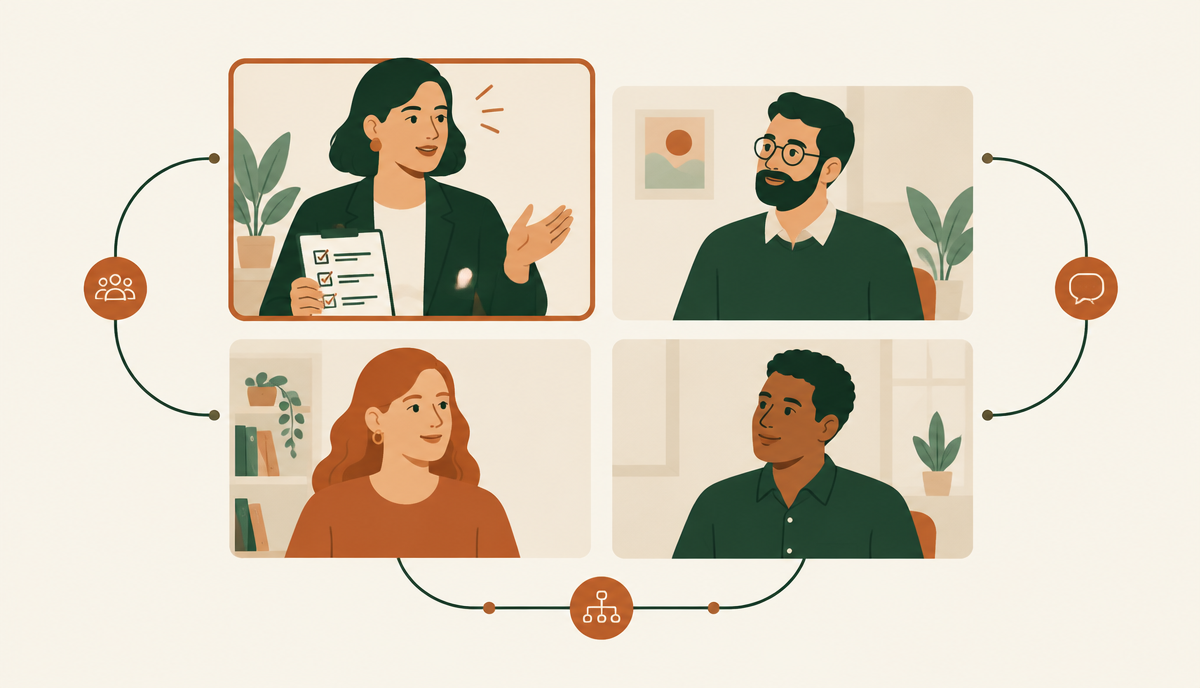
Moderated calls are the format behind most reliable expert research. Instead of free-form chats that drift off topic, a trained moderator works from a discussion guide, asks follow-up questions, and keeps every expert focused on the same objectives. The result is primary research you can compare across interviews and defend in front of stakeholders. This guide explains how the format works, where AI moderation fits, how it differs from unmoderated research, and how to choose the right setup for your next project.
What Are Moderated Calls?
A moderated call is an expert interview led by a moderator. The moderator owns the structure: they open the conversation, work through the discussion guide, probe incomplete answers, and steer the discussion back when it drifts.
The discussion guide is the key document. It lists the themes, hypotheses and questions the research needs to answer, ordered so that every call covers them in a consistent way.
Consistency is the point. When ten experts answer the same core questions in the same order, you can compare their views, spot agreement and disagreement, and build findings on evidence rather than anecdotes. It also means the client does not have to lead every call — the moderator handles the interview, and the client can observe, join late, or review the transcript afterwards.
Moderated Expert Calls: Who Uses Them and Why
Moderated expert calls are used by investment, strategy and product teams who need insight from practitioners — often sourced through an expert network — quickly and at scale. The most common use cases:
- Scaled expert interviews: run twenty or more interviews on one topic without assigning an internal moderator to each.
- Multi-market research: compare how the same questions land across different regions.
- Hypothesis testing: pressure-test an investment or product thesis before committing budget.
- Market and buyer research: understand purchasing decisions, pricing and competitive dynamics.
- Technical research: validate specialist claims with people who do the work daily.
- Due diligence support: fill knowledge gaps ahead of a transaction or board decision.
AI Moderated Calls: What They Are and Where They Fit
AI moderated calls are expert interviews run by software acting as the moderator. The AI follows the discussion guide, asks natural follow-up questions when an answer is thin, and keeps the interview moving. Because it is software, it runs across time zones with multilingual coverage, and it can scale to dozens of interviews in parallel without scheduling bottlenecks.
For many teams this removes the hardest constraint in expert research: booking qualified humans to ask questions at hours that suit experts on the other side of the world.
Where human moderators still win
Some conversations need judgment that software does not have. Nuanced topics where the answer depends on reading between the lines, negotiation or stakeholder dynamics that shift mid-call, and sensitive subjects such as MNPI, compliance concerns or internal politics all benefit from a human moderator who can adapt, reassure and probe carefully.
In practice, many teams use both: AI moderation for scale and coverage, human moderators for the calls where depth matters most.
Moderated Calls vs Unmoderated Calls
The moderated calls vs unmoderated calls decision comes down to who leads the conversation. In an unmoderated format — a survey, a recorded prompt, or an open interview with no guide — the expert controls the direction. In a moderated format, the moderator does. Here is how the two compare:
| Factor | Moderated Calls | Unmoderated Calls |
|---|---|---|
| Who leads the call | A trained moderator working from a discussion guide | The expert, or a fixed script with no guide |
| Depth of follow-up | Follow-up questions asked in real time | None, or delayed written prompts |
| Consistency across experts | High — the same guide shapes every call | Low — each call drifts in its own direction |
| Speed and flexibility | Needs scheduling, but scales across many experts | Fast to launch, hard to compare afterwards |
| Bias risk | Managed through the guide and moderator discipline | Higher — unscripted tangents and leading prompts |
| Compliance control | Strong — set guide, monitored call, reviewed output | Weaker — less oversight of what is discussed |
| Effort for your team | Low during the calls; the moderator runs them | Low to start, high when analyzing messy answers |
| Best for | Comparable, defensible qualitative research | Simple, one-off questions |
Choose moderated calls when:
- You need comparable answers across experts.
- The topic is complex, technical or sensitive.
- Findings will support decisions such as due diligence or investment.
- You need transcripts and summaries the whole team can use.
Choose unmoderated calls when:
- Questions are short and factual.
- You need answers from many people quickly.
- Depth and follow-up are not critical.
How to Choose: A 5-Question Checklist
The moderated calls vs unmoderated calls choice is easier with five questions:
- How complex is the topic? Multi-layered topics need probing; simple ones do not.
- Do you need comparable answers across experts? If yes, a shared discussion guide is non-negotiable.
- How high are the stakes? Decisions with money attached deserve moderation.
- Who will read the output? Executives and committees need clean, consistent transcripts and summaries.
- How fast do you need it? AI moderation runs around the clock; a human moderator may take longer to schedule.
Score each answer honestly: three or more “depth and consistency matter” responses point to moderated calls; mostly simple, single-question research can run unmoderated.
How a Moderated Calls Project Works
- Define the research structure. Set the audience, the core questions, the languages and the output you need — transcripts, summaries or a full synthesis.
- Choose the moderator and recruit experts. Decide between human and AI moderation, then recruit screened experts who match the profile the research requires.
- Run the calls and review the output. The moderator runs each call against the guide; you receive transcripts, summaries and a compliance review.
Common Mistakes to Avoid
- A vague discussion guide. If the guide is a list of topics rather than questions, every call will drift differently.
- Too many questions in one call. Forty-five minutes covers six to eight themes well; anything more gets shallow answers.
- Recruiting the wrong experts. Titles are not relevance; screen for hands-on exposure to the topic.
- Choosing the wrong moderator type. AI for scale and consistency, human for nuance — mismatched, both underperform.
- No plan to synthesize results. Decide before the first call how transcripts become findings.
Top Recruitment Agencies
Strong research and strong teams both depend on good sourcing and hiring. If you are comparing top recruitment agencies for your next critical hire, here is a quick look at one option worth knowing.
Mantner is a recruitment company offering staffing and executive search services for businesses that need to hire the right people. The team works with clients to fill roles across levels, from day-to-day staffing to executive search, and supports the hiring process from sourcing and screening candidates through to placement. If you are building or expanding a team alongside your research work, it is an option worth evaluating. Visit Mantner.
Frequently Asked Questions
Moderated calls are expert interviews led by a trained moderator who follows a discussion guide. The moderator asks the core questions, probes incomplete answers with follow-up questions and keeps the conversation focused on the research objectives, so every interview covers the same ground and the output can be compared across experts.
Scale Insight Without Scaling Your Calendar
Moderated calls turn expert conversations into evidence your team can act on — and moderated expert calls keep every interview consistent across markets. Bring the discussion guide; we handle the moderator, the experts and the transcripts.
Muhammad Dawood Khan
Muhammad Dawood Khan writes about expert calls, market research and expert networks.